Every few months I get the same message from a reader: "I finally deleted Mint years ago, tried three replacement apps, and now I don't trust any of them. Which one is actually good?" That's the wrong first question. The right first question is simpler and a lot less fun: how does this app pay its engineers if you're not paying it a dime?
Somebody's paying for the servers, the app store fees, the customer support team. If it isn't you, it's someone else, and that someone else usually wants something from your data. Not in a shadowy conspiracy way — just in a perfectly ordinary "this is a business" way. Once you start asking that question about every money app on your phone, the whole category gets a lot easier to sort.
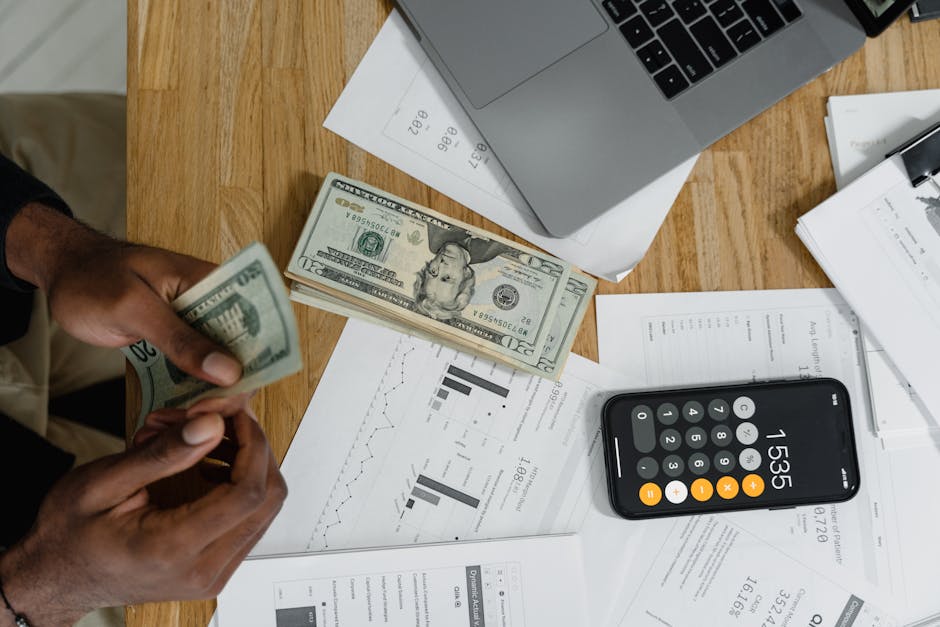
Photo by Tima Miroshnichenko on Pexels
The three ways a "free" app actually gets paid
Almost every free personal finance app makes money one of three ways, and they're not equally bad for you.
- Affiliate and lead-gen revenue. The app recommends a credit card, a savings account, or a loan, and gets paid when you sign up. This is how a lot of "your credit score" apps and comparison tools survive.
- Data licensing and aggregation. Your spending patterns, anonymized or not, get bundled and sold to advertisers, hedge funds, or market research firms. This was a huge part of Mint's actual business model long before it shut down, and it's still standard across the category.
- Freemium upsells. The free version is a funnel toward a paid subscription tier with "advanced" features that used to just be called features.
None of these automatically make an app bad. I've written before about whether it's safe to link your bank account to a budgeting app at all, and the honest answer hasn't changed: read-only aggregators like Plaid are reasonably secure from a hacking standpoint. The privacy question is separate from the security question, and it's the one people skip.
Why this actually matters for your wallet, not just your privacy
Here's the part that's easy to miss: the monetization model shapes what the app nudges you to do, and that nudge has a dollar cost even when the app itself is free.
An app that makes money on card affiliate links has a quiet incentive to show you card offers even when you don't need a new card. An app that makes money selling aggregated spending data has an incentive to keep you engaged and linked to as many accounts as possible, whether or not that helps your budget. An app funded by subscriptions has the most boring, most aligned incentive of the three: keep you subscribed by actually being useful.
Say you're comparing two apps. One is free and monetized through card recommendations. The other costs $8 a month, no ads, no data sale, subscription only. On paper the free one looks like the obvious pick — it's $96 a year cheaper. But if the free one nudges you into opening one card you didn't need, with an annual fee you forget to cancel, you've just paid more than the subscription would've cost, and you got a hard inquiry on your credit report as a bonus. The "free" app wasn't free. It just moved the cost somewhere you weren't watching.
I'm not saying the paid app always wins that math. Plenty of people use free, ad-supported apps for years and never take a single recommended offer. I'm saying the comparison most people run — price tag only — is missing half the ledger.
A quick gut-check before you link an account
Before I connect any new tool to my accounts, I run through a short, boring checklist. It takes two minutes and it's saved me from at least one app I now regret ever trying.
1. Read the privacy policy's "how we make money" section, not the marketing page. Most reputable apps disclose this somewhere, even if it's buried. If you genuinely can't find any explanation of revenue, that's itself useful information. 2. Check if it sells or shares data with third parties beyond service providers. There's a real difference between "we use Plaid to connect your bank" and "we share your transaction categories with advertising partners." 3. Notice what it pushes you toward. If every screen ends in a recommended product, that's the business model talking, not necessarily bad advice — but it's worth knowing which one you're hearing. 4. Ask if you'd pay for it. If the honest answer is "no, but I'll use it if it's free," that's fine — just go in knowing you're the product, not the customer, and budget your trust accordingly.
None of this means you need to pay for everything. Plenty of free tools are worth using with eyes open. It just means "free" shouldn't be the deciding factor by itself.
An example: two savings-round-up apps, same idea, different math
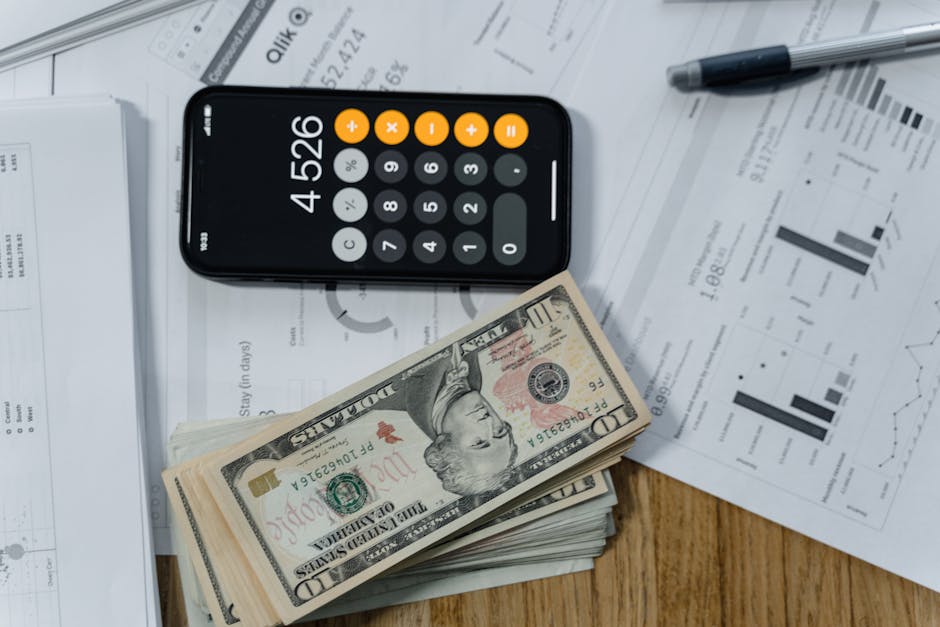
Photo by Tima Miroshnichenko on Pexels
Say two round-up savings apps both take your debit purchases and round up to the nearest dollar into a savings account. App A is free and makes its money by investing your round-ups into partner funds with a small revenue share baked in that you never see as a line item. App B charges $3 a month flat and keeps your round-ups in a plain savings account you control directly.
If you're only rounding up $15 a month, App A's hidden cut is probably smaller than App B's flat $3 fee — free wins here. But if you're someone who rounds up $60 or $70 a month because you swipe your card constantly, the math can flip, especially once you factor in that App B gives you a cash account with no strings, and App A's structure nudges you toward products you didn't go looking for. There's no universal right answer. There's only "which model fits how much you actually use it," and you can't answer that without doing the two minutes of digging first.
FAQ
Is it ever worth paying for a budgeting app instead of using a free one?
Sometimes, yes. If you use an app daily and its free version supports itself with ads, upsells, or data sales that make you uneasy, a flat subscription can be the cheaper option once you count the actual cost of accepting nudges you don't need. It comes down to how heavily you use it and how much the monetization model bothers you.
How do I actually find out how an app makes money if it isn't obvious?
Check the privacy policy for language about "third-party partners," "advertising," or "data sharing," and check the app's own "About" or investor pages if they have them. If a free app has raised venture funding, someone eventually expects a return, and it's worth a few minutes to see where that's projected to come from.
Does this mean I shouldn't link my bank account to any free app?
No — plenty of free apps are perfectly reasonable to use, and read-only bank linking through a service like Plaid is generally safe from a security standpoint, which I've covered separately. This is more about understanding incentives than avoiding linking altogether.
The takeaway
Most people pick a money app the same way they pick a streaming service: by price and by what their friend uses. That's fine for entertainment. For something that touches your actual bank account and nudges your financial decisions, it's worth two extra minutes to ask who's really paying the bill. Free isn't a red flag. It's just a question you haven't finished asking yet.
Comments
Post a Comment