
Photo by Aukid phumsirichat on Pexels
The most confusing thing that happens after you do everything right
You pay off your car loan two years early. You feel great about it. You check your credit score a few weeks later expecting a gold star, and instead it's dropped six or eight points.
This trips people up constantly, and I get why — it feels like the system is punishing good behavior. It isn't, exactly. But the reason it happens says a lot about what credit scores are actually measuring, which is not "are you financially responsible" but something narrower and weirder: how you're currently using credit, right now, on paper.
I've written before about why your score looks different on every app you check. This is a related but separate issue — it's not about which score model you're looking at, it's about what happens to any of them when a loan disappears from your file.
What's actually happening when a paid-off loan dents your score
Two mechanics are usually doing the damage, sometimes both at once.
Credit mix. Scoring models like a variety of account types — a mix of revolving credit (credit cards) and installment credit (loans with fixed payments, like auto or student loans). When your only installment loan gets paid off and closes, your file suddenly looks thinner and more one-dimensional. You didn't get worse at managing credit. Your file just got less diverse.
Average age of accounts. This one's sneakier. Closed accounts do stay on your report for a while and still count toward your history, but at some point — especially with installment loans — they age off differently than open revolving accounts. If that loan was one of your oldest accounts, losing it from the active mix can nudge down the average age calculation depending on which model is scoring you.
There's a third, smaller factor: if the loan was in good standing with a long clean payment history, that's a strong positive signal actively reporting every month. Once it's closed, that monthly "still paying on time" data point stops being generated. The account remains on your history, but it's no longer contributing fresh positive activity.
None of this means paying off the loan was a mistake. It just means the score dip is a side effect of the scoring model's mechanics, not a verdict on your decision.
A worked example
Say you've got a car loan with a $9,000 balance, one credit card you use for groceries and gas, and a five-year clean payment history on both. Your score sits around 740.
You pay off the car loan in a lump sum. Three weeks later your score reads 733. Nothing else in your financial life changed — same card, same balance, same payment habits. What changed is that your file went from "one revolving account plus one active installment account" to "one revolving account," and the model that liked your mix now likes it slightly less.
Give it six to twelve months and, assuming you keep paying your card on time and don't rack up new debt, that dip usually recovers and then some, because you've also lowered your overall debt load and freed up cash flow. The short-term drop is a blip in a longer upward trend, not a new direction.
What this means you should actually pay attention to
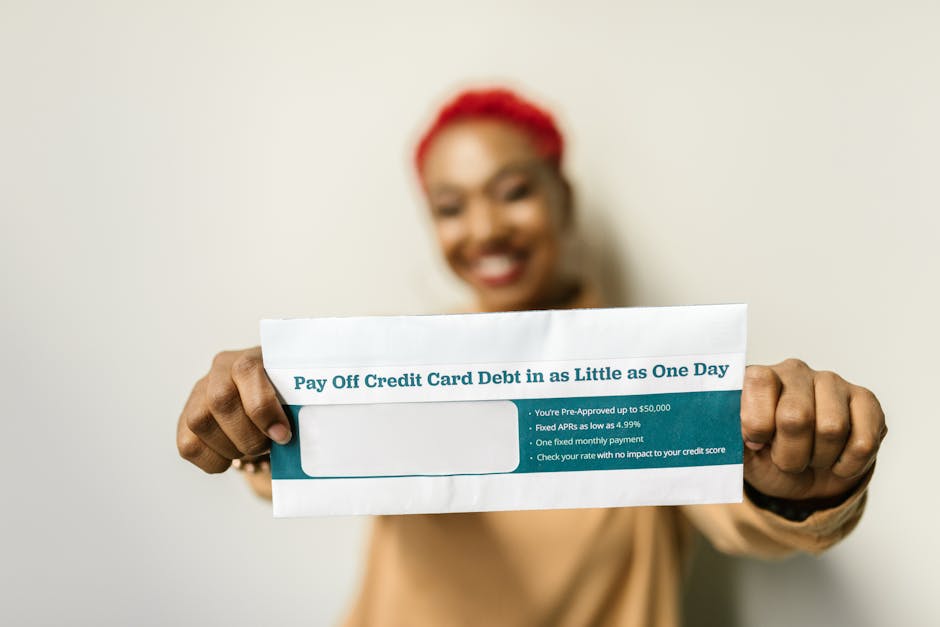
Photo by RDNE Stock project on Pexels
Here's my honest opinion, and it goes against a lot of the "credit score maximizing" content out there: optimizing your score around events like this is usually the wrong target. A car loan payoff that saves you real interest is a better financial move than protecting eight points on a score you're not about to use for anything.
The exception is timing. If you're planning to apply for a mortgage or another big loan in the next few months, this is worth knowing in advance — not so you avoid paying off debt, but so you don't pay off a loan and then immediately go shopping for a rate, only to be confused when the number moved. Sequence matters more than most people think. If a major application is coming up, it's worth checking your own report a month or two ahead of major payoff decisions, not after.
The moves that actually build your score, separate from this
If the goal is a genuinely stronger score over time rather than reacting to one dip, a few things consistently matter more than anything above:
- Keeping revolving utilization low — generally the lower the better, and definitely under 30% of your limit on any card that reports a balance
- Never missing a payment, even by a few days, since payment history carries the most weight of any factor
- Leaving old accounts open and lightly used instead of closing them, since that protects your average account age
- Only opening new credit when you actually need it, since each hard inquiry has a small, temporary effect
None of these are exciting. That's kind of the point — the boring, repeatable stuff is what actually moves the number, not any single event like a payoff.
FAQ
Should I avoid paying off a loan early just to protect my credit score?
No. A few points of temporary score movement almost never outweighs the interest you save by paying off debt early. Protect the score when it actually matters for something specific you're doing soon, like a mortgage application — otherwise let the math on the debt itself lead the decision.
How long does the score dip usually last?
It varies by person and by which scoring model is being used, but a few months is typical before the score recovers, often ending up higher than before once your overall debt load is factored back in. It's not a permanent mark against you.
Does this happen with credit cards too, if I pay one off and close it?
It can, and often more noticeably, since closing a card also reduces your total available credit — which can raise your utilization ratio even if your spending didn't change. If you're paying off a card, it's usually better to keep it open with a zero balance rather than closing it, unless it has a fee you don't want to keep paying.
The number will catch up to the decision
If there's one thing I keep coming back to in writing about credit, it's that the score is a lagging, narrow proxy for something bigger — your actual financial position. A temporary dip after a smart payoff is the model reacting to a snapshot, not a signal that you did something wrong. Make the debt decision on its own terms, keep doing the boring stuff consistently, and the score tends to sort itself out.
Keep reading
- Why Your Credit Score Looks Different on Every App You Check (And Which One Actually Matters)
- Paying Your Credit Card Early Doesn't Help Your Score—Paying at the Right Time Does
- Budgeting by Paycheck, Not by Month, Is the Only Version That Actually Survives Real Life
#creditscore #personalfinance #debtpayoff #creditbuilding
Comments
Post a Comment