
Photo by DΛVΞ GΛRCIΛ on Pexels
The Pitch Sounds Almost Too Easy
You buy a coffee for $4.35, the app rounds it up to $5, and that extra 65 cents quietly slides into savings. Do it enough times and, according to every ad for these apps, you'll barely notice the money leaving while your balance creeps upward. It's the kind of thing that sounds like a hack because it requires zero willpower. No budget to stick to, no spreadsheet, no moment of "should I really buy this."
I like the idea in principle — I've said before that automatic beats heroic almost every time. But "automatic" and "meaningful" are two different questions, and round-up apps only really answer the first one. Let's actually do the math instead of taking the marketing at face value.
What Round-Ups Actually Generate
Round-up features work off your average transaction, not your total spending. That distinction matters more than people expect.
Say you make 20 debit card purchases a month — groceries, gas, a few subscriptions, some takeout. The average round-up on a typical basket of purchases lands somewhere between 40 and 60 cents per transaction, because most purchases either land close to a whole dollar already or get rounded up by a small amount. Multiply a 50-cent average by 20 transactions and you get $10 a month. Over a year, that's $120.
That's not nothing. But it's also not the kind of number that changes your financial situation. It won't cover an emergency car repair. It probably won't fully fund a holiday budget. If you're picturing round-ups quietly building a real cushion, the honest math says you're looking at a rounding error on your rounding errors.
Some apps try to boost this by offering "multipliers" — 2x or 3x your round-up — which at least gets you into more useful territory, maybe $240 to $360 a year. Still modest, but worth noticing if your app offers it and you're not using it.
Where the Real Value Actually Is
Here's my honest take, and it's a little contrarian for a personal finance post: round-up apps are not a savings strategy. They're a behavior on-ramp.
The actual value isn't the 65 cents. It's that the app gets you comfortable with money automatically leaving your checking account without you flinching. Once that habit feels normal, you're in a much better position to increase the automatic amount that actually matters — a $50 or $100 automatic transfer on payday, set up once and forgotten.
I've seen this play out with readers of budgeting subreddits and comment sections for years: people start with round-ups because it feels safe and small, then six months later graduate to a real automatic savings percentage because the psychological barrier of "will I miss this money" already got cleared. The round-up itself is basically a training wheel. Useful for that. Not the destination.
If you're using a round-up app and feeling good about your savings rate because of it, that's worth a second look. It's easy to mistake "I have an automated system" for "my automated system is sized correctly."
A Quick Example Worth Running for Yourself
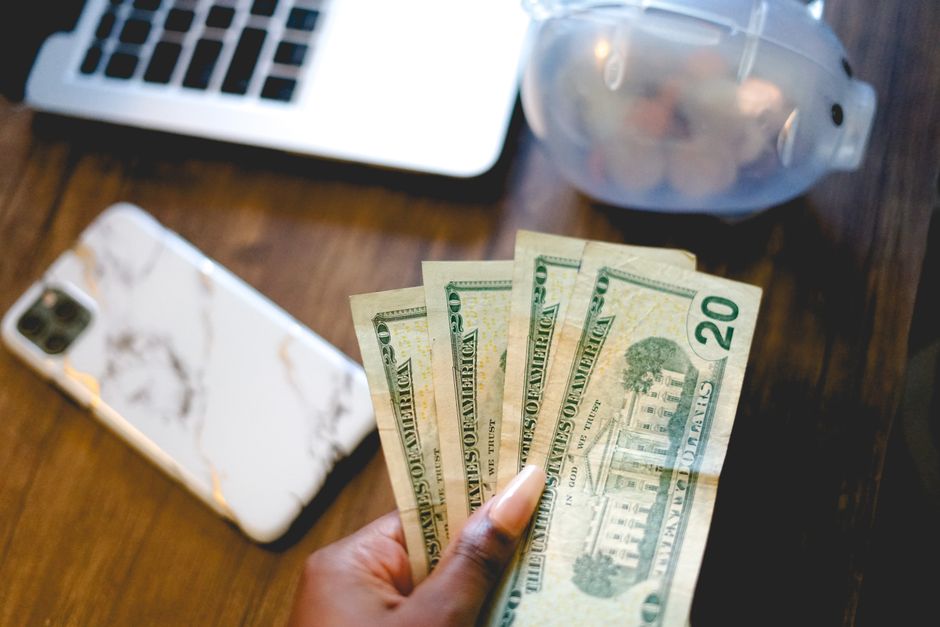
Photo by Joslyn Pickens on Pexels
Say you take home $3,800 a month. A round-up app nets you roughly $15 a month — a bit above average because you use your card for almost everything, including small purchases. That's about 0.4% of your take-home pay going to savings automatically.
Compare that to a plain old automatic transfer of just 2% of your paycheck on payday — $76 a month, no rounding involved, same "I don't think about it" effort level. Same laziness required. Nearly five times the result.
This is the part that bugs me about how these apps are marketed. They're sold as a savings solution when they're really a savings appetizer. Nothing wrong with an appetizer. Just don't mistake it for dinner.
Where Round-Ups Do Pull Their Weight
I don't want to be entirely down on the feature — there are a couple of spots where it earns its keep:
- Paying down small debt faster. Some apps let you direct round-ups at a credit card balance instead of a savings account. On a card with a small balance, an extra $100–150 a year applied directly to principal isn't dramatic, but combined with normal payments it shaves a bit of time and interest off the payoff.
- Investing apps that round up into a brokerage account. Here the math changes over a long horizon because of compounding, even if the contribution is small. Ten or fifteen years of consistent $10-a-month contributions adds up to more than the raw total would suggest, though it's still not a substitute for contributing meaningfully to retirement accounts.
- Building the automation habit itself, as covered above — probably the single best use case, even though it's the least glamorous one.
Where round-ups fall short is anywhere you actually need the money to move the needle — an emergency fund from scratch, a house down payment, anything with a real deadline. For those goals, you need a deliberate number, not spare change.
FAQ
Do round-up apps charge fees that eat into the savings?
Many do, typically a flat monthly fee in the $1–5 range rather than a percentage. On a $10-a-month round-up total, a $3 fee is eating a meaningful chunk of what you're actually generating. Always check whether the math still works once the fee comes out — sometimes it doesn't, especially if your spending habits are already fairly cash-based and you're not generating much in round-ups to begin with.
Is it better to just set a fixed automatic transfer instead?
For most people, yes, if the goal is building actual savings. A fixed transfer is predictable, easier to plan around, and almost always moves more money than round-ups do. Round-ups work well as an addition to that transfer, not a replacement for it.
Do banks' built-in round-up features work the same way as apps like Acorns?
The core mechanic is similar — spare change from debit transactions gets swept into savings — but where that money goes differs. A bank's round-up usually lands in a regular savings account earning whatever your bank pays, while an app like Acorns typically invests it. That's a meaningful difference over a long timeline, so it's worth knowing which one you're actually using before you assume you know what you're getting.
The Takeaway
Round-up savings apps aren't a scam and they aren't useless — they're just smaller than the marketing wants you to believe, and they're solving a different problem than most people think. If you're already comfortable moving money automatically, skip straight to a real percentage-based transfer and let it do the heavy lifting. If you're not there yet and the idea of "losing" $76 a month feels scary, start with round-ups, get used to the feeling, and treat it as the on-ramp it actually is. Just don't confuse the appetizer for the meal.
Keep reading
- What Surfshark Family Sharing Actually Costs Per Person (And Where It Falls Apart)
- What ElevenLabs Actually Costs Per Finished Minute of Audio
- ClickUp Annual vs. Monthly: What You're Actually Locking In for That Discount
#moneyapps #savings #personalfinance #budgetingtools
Comments
Post a Comment