
Photo by Arturo Añez. on Pexels
The Part Nobody Mentions When They Tell You to Start a Side Hustle
Every side hustle article talks about the upside. Drive for a delivery app, sell stuff online, freelance on the weekends, and suddenly you've got an extra few hundred bucks a month. Great. Nobody follows that up with what happens six months later when you realize none of that money had taxes taken out of it.
I've written before about the real math behind what a side hustle pays you per hour once you account for gas, wear on your car, and the time you're not spending on anything else. This is the sequel nobody asks for: what the IRS expects from that money, and why September is a deadline a lot of people don't even know exists.
Here's the short version. If you're an employee, your company withholds taxes from every paycheck automatically. You never see that money, so you never have to think about it. Side hustle income doesn't work that way. Nobody withholds anything. The full amount lands in your account, it feels like it's all yours, and the tax bill just... waits. Quietly. Until it doesn't.
Why Side Hustle Money Gets Taxed Differently
When you're self-employed — and that's what you are the moment you're driving, freelancing, or selling things for profit on a regular basis — you're on the hook for two things a regular paycheck already handles for you.
First, ordinary income tax on what you earned, same as any job.
Second, self-employment tax, which covers the Social Security and Medicare contributions your employer normally splits with you. As an employee, you pay half and your employer quietly pays the other half. As a self-employed person, you're both halves. That combined rate is 15.3% on your net self-employment earnings, on top of whatever income tax bracket you're in.
That's the part that catches people off guard. It's not just "add a little tax." It's a meaningfully bigger cut than people expect from money that felt like pure bonus.
The Quarterly System Most People Have Never Heard Of
Because nobody's withholding anything for you, the IRS expects you to pay estimated taxes four times a year instead of one lump sum in April. The general due dates fall in mid-April, mid-June, mid-September, and mid-January of the following year.
That September date is the one that trips people up the most. It's not tax season, nobody's talking about it, and it lands right in the middle of a normal month with zero fanfare. If you've had a side hustle running since spring and haven't set anything aside, this is usually the point where the gap between "money I made" and "money I actually get to keep" becomes obvious.
Missing an estimated payment isn't necessarily a disaster — the IRS mostly handles it as an underpayment penalty rather than something dramatic — but it's an entirely avoidable cost. It's a fee for not planning, not a fee for having side income in the first place.
A Worked Example
Say you drive for a delivery app on evenings and weekends and it nets you about $600 a month after gas and expenses. Over a year that's $7,200. Run the self-employment tax alone on that and you're looking at roughly $1,100 before income tax even enters the picture. Depending on your regular job and bracket, the income tax portion stacks on top of that.
Now say you never set anything aside, spent the $600 a month like normal spending money, and then filing season shows up with a bill for over a thousand dollars you don't have sitting anywhere. That's not a math problem. That's a planning problem. And it's completely fixable with one boring habit.
The One Number Worth Knowing
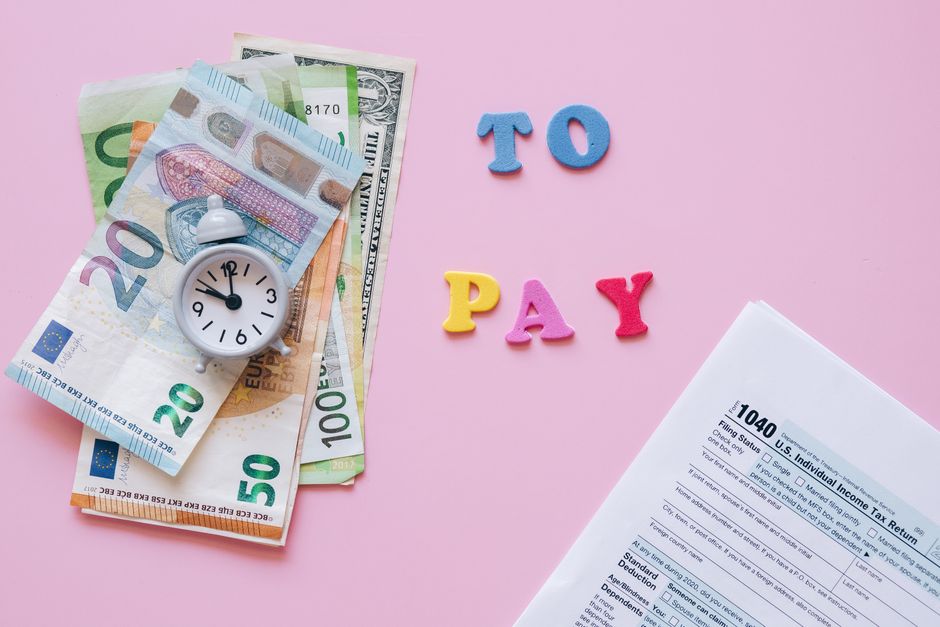
Photo by Leeloo The First on Pexels
You don't need to become your own accountant to handle this reasonably well. A common rough guideline people use is setting aside somewhere around a quarter to a third of net side hustle income for taxes, then adjusting once you actually see what you owe. It's not precise, but it beats the alternative, which is finding out in April with no cushion at all.
If your side income is small and irregular, the stakes are lower and the math is more forgiving. If it's become a real, steady chunk of your monthly income, this stops being optional and starts being part of how you should think about that money from the day it hits your account.
Automate It So You're Not Relying on Willpower
This is where my actual opinion comes in, and it's the same one I keep coming back to on this blog: the plan that survives is the one that doesn't depend on you remembering to do something.
- Open a separate savings account just for taxes on this income. Don't touch it for anything else.
- Every time a payout lands, move your set-aside percentage over immediately, the same day if you can.
- Treat that transferred money as already spent. It's not yours; it's the government's, you're just holding onto it for a few months.
- Check in each quarter around the estimated tax deadlines to see if what you've set aside roughly matches what you'd owe.
Most people who get burned by this weren't lazy. They just meant to "figure it out later" and later kept getting later. A separate account with an automatic transfer removes that whole decision from the table.
FAQ
Does this apply if my side hustle only makes a couple hundred dollars a month?
It can, but the stakes are smaller and the process is more forgiving at low amounts. The habit of setting a percentage aside is worth building either way, since side income tends to grow once you find something that works.
If I already have a regular job with taxes withheld, do I still need to worry about this?
Yes, potentially. Withholding from your main job covers your main job's income, not the side income stacked on top of it. Some people adjust their day-job withholding higher instead of making separate quarterly payments, which can be a simpler option worth asking a tax professional about.
What if I'm not sure whether I owe estimated taxes at all?
This varies based on your total income, your filing situation, and how much (if anything) is already being withheld elsewhere. It's genuinely worth a conversation with a tax professional or a look at current IRS guidance rather than guessing, since the rules account for a lot of individual variables.
The Takeaway
Side hustles get sold as free money, and in a sense the effort part really is on you and really does pay off. But "free" isn't the same as "untaxed," and the gap between those two ideas is exactly where people get an unpleasant surprise every fall. You don't need to overhaul your whole financial life to handle this well. You need one separate account, one automatic transfer, and the discipline to treat that money as already gone. That's it. That's the whole system, and it's the same principle that shows up in pretty much everything I write about here: the boring automatic move beats the heroic effort every single time.
Keep reading
- The Side Hustle Math Nobody Runs: What You're Actually Making Per Hour After Everything
- The Side Hustle Tax Bill Nobody Warns You About (And How to Avoid the April Gut-Punch)
- Sinking Funds Are the Boring Budgeting Trick That Actually Stops the "Surprise Expense" Spiral
#sidehustles #taxes #extraincome #selfemployment
Comments
Post a Comment